A powerful 7.7-magnitude earthquake struck central Myanmar on Friday, March 28, 2025, at approximately 1:20 p.m. local time, according to official geological monitoring agencies. The seismic event, which originated near the city of Monywa, was strong enough to send tremors across a wide region, affecting multiple neighboring countries including Vietnam, Thailand, China, Laos, and India. Residents across these areas reported noticeable shaking, highlighting the far-reaching impact of the quake.
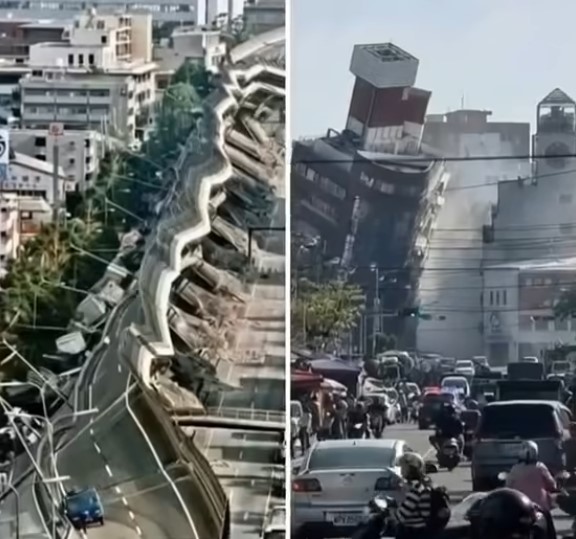
Roughly ten minutes after the initial earthquake, a significant aftershock measuring 6.4 in magnitude occurred about 20 kilometers from the town of Kyaukse, also within Myanmar. This secondary tremor reinforced concerns among experts and residents, as aftershocks can sometimes pose additional risks, particularly in areas with vulnerable infrastructure.
According to India’s National Center for Seismology, the epicenter of the primary earthquake was located at latitude 21.93°N and longitude 96.07°E, with a depth of approximately 10 kilometers. This relatively shallow depth played a crucial role in amplifying the intensity of the tremors felt at the surface, allowing the seismic waves to travel farther and affect a larger geographic area than deeper earthquakes typically would.
In Vietnam, people in major cities such as Hanoi and Ho Chi Minh City reported feeling the tremors, particularly those living or working in high-rise buildings. Many described the sensation as a gentle but noticeable swaying or rolling motion that lasted several seconds. Social media quickly filled with firsthand accounts as individuals shared their experiences, though authorities confirmed that no injuries or structural damage had been reported at the time.
Similarly, in Bangkok, Thailand, the effects of the earthquake were clearly observed. Residents noted water sloshing out of swimming pools, a common indicator of moderate to strong seismic activity in urban environments. Office workers in tall buildings also reported brief but distinct shaking, prompting temporary evacuations in some cases as a precautionary measure.
Additional reports came from northern India, Laos, and parts of southern China. While the tremors in these regions were less intense, they were still perceptible, especially in multi-story structures. The widespread nature of the shaking underscores how seismic events in one country can quickly become a regional concern, affecting millions of people beyond the immediate epicenter.
As of now, there have been no confirmed casualties or reports of major infrastructure damage in Myanmar or neighboring countries. However, authorities continue to monitor the situation closely, as aftershocks remain a possibility in the hours and days following a large earthquake. Emergency response teams and geological agencies are maintaining heightened alert levels to ensure public safety.
Experts emphasize that while this earthquake did not result in immediate devastation, it serves as a critical reminder of the region’s geological vulnerability. Southeast Asia lies within an active tectonic zone, where the movement of plates—particularly the interaction between the Indian Plate and the Eurasian Plate—frequently generates seismic activity. Although smaller earthquakes are relatively common, events of this magnitude are far less frequent and carry the potential for significant consequences.
Recent seismic activity in the region further highlights the need for preparedness. In February 2025, a minor 2.6-magnitude earthquake was recorded in Chuong My District near Hanoi. While that event caused no damage, it served as an early reminder that even areas not traditionally considered high-risk can experience seismic activity.
Understanding earthquake magnitude is essential for evaluating potential risks. A 7.7-magnitude earthquake is classified as major and is capable of causing serious damage if it occurs near densely populated areas. By comparison, earthquakes below magnitude 3 are often not felt, while those between 5.0 and 5.9 may cause moderate damage. Events exceeding magnitude 7.0 are considered severe and can lead to widespread destruction under certain conditions.
The depth of an earthquake also plays a significant role in its impact. Shallow earthquakes, such as this one, tend to produce stronger surface shaking, which can increase the likelihood of damage even in areas located far from the epicenter. This explains why the recent quake was felt across such a broad region.
Authorities across affected countries have reiterated important safety guidelines. During an earthquake, individuals indoors are advised to drop to the ground, take cover under sturdy furniture, and hold on until the shaking stops. Those outdoors should move away from buildings, streetlights, and utility wires to reduce the risk of injury. After the tremors subside, it is crucial to check for hazards such as gas leaks or structural damage and to follow updates from official sources.
Preparedness remains one of the most effective ways to reduce the impact of natural disasters. Emergency kits, evacuation plans, and public awareness campaigns can significantly improve outcomes when earthquakes occur. Communities that are informed and prepared are better equipped to respond quickly and safely.
This event also highlights the importance of infrastructure resilience. Rapid urban development across Southeast Asia has led to densely populated cities, but not all structures are built to withstand seismic forces. Strengthening building standards and ensuring proper enforcement can help minimize risks in future events.
Regional cooperation is another key factor in managing natural disasters. Countries in Southeast Asia share similar geological risks, making collaboration essential. Joint training exercises, shared research, and coordinated emergency response strategies can enhance the region’s overall resilience.
Beyond the immediate physical effects, earthquakes can also have economic consequences. Even without visible damage, disruptions to transportation, tourism, and supply chains can impact local and national economies. Investing in preparedness is therefore not only a matter of safety but also of long-term stability.
As authorities continue to monitor aftershocks and assess potential risks, individuals are encouraged to stay informed and take proactive steps to ensure their safety. Reliable information, community awareness, and preparedness efforts all play vital roles in reducing the impact of such events.
The March 28 earthquake stands as a powerful reminder of the natural forces that shape our world. While the region was fortunate to avoid significant damage, the event should not be overlooked. Instead, it should serve as an opportunity to strengthen systems, improve awareness, and build a safer, more resilient future for communities across Southeast Asia.