Malia Obama, the eldest daughter of former U.S. President Barack Obama and Michelle Obama, has spent much of her life in the public eye. Yet as she moves further into adulthood, she appears increasingly determined to establish an identity that is separate from the expectations attached to her famous family. In the entertainment world, that effort has taken a visible form: she has chosen to use the professional name “Malia Ann” as she builds a career in film and storytelling.
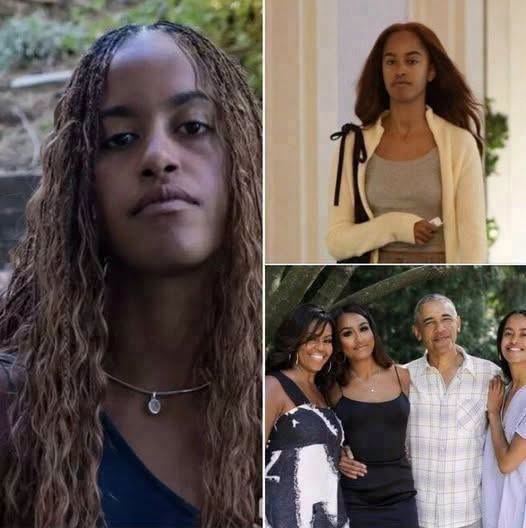
The choice may seem small, but it carries a clear message. Rather than relying on the Obama surname, Malia is presenting herself through her own creative work. Using her middle name allows her to create distance from the legacy that has surrounded her since childhood. It does not mean she is turning away from her parents or denying where she comes from. Instead, it reflects a desire to be evaluated for what she creates, not simply for the family into which she was born.
That distinction matters in Hollywood, where a familiar last name can open doors but can also create enormous expectations. For someone whose parents have been internationally known, every professional move can attract attention beyond the work itself. By appearing as Malia Ann in creative settings, she is signaling that she wants audiences and collaborators to engage with her ideas on their own terms.
Malia has spent time learning about film and television from behind the scenes, building experience rather than stepping into the spotlight. One of her most credits came from her work as a writer on Donald Glover’s television series “Swarm.” The experience gave her an opportunity to participate in a professional writers’ room and contribute to a project known for its distinctive style and ambitious themes.
That role also helped demonstrate that her ambitions extend beyond the public image people may associate with the Obama family. Writing for television requires collaboration, discipline, an understanding of character, and the ability to shape ideas into stories that connect with viewers. Malia’s involvement suggested that she was interested in the actual craft of entertainment, not merely the attention that can come with being connected to a famous name.
She has also pursued independent creative projects, continuing to explore subjects such as identity, relationships, love, personal growth, and self-discovery. Those themes are especially fitting for a young filmmaker attempting to define her own place in the world. They also reflect the larger journey suggested by her professional name: moving from an identity largely shaped by public history toward one shaped by personal choices and artistic interests.
Her decision to use “Malia Ann” can therefore be understood as part of a broader effort to create healthy boundaries between family fame and individual achievement. The Obama name will always be part of her story, and there is no realistic way to erase the public recognition that comes with it. However, choosing a different professional name gives her a measure of control over how she introduces herself as an artist.
For many people, especially those born into highly visible families, independence is not simply about leaving home or choosing a career. It can also mean learning how to separate personal goals from assumptions made by strangers. Malia has faced that challenge on an unusually large scale. Millions of people first knew her as a child living in the White House, long before she had the opportunity to decide how she wanted to be known professionally.
Now, as an adult working in entertainment, she has the chance to reshape that public image. Her Los Angeles appearances and industry work naturally receive attention because of her background, but the more important story is the direction she appears to be taking. Instead of building a public career around being a former First Daughter, she is investing in writing, filmmaking, and creative development.
That approach suggests patience. Rather than rushing to become a highly visible celebrity, Malia Ann has focused on learning the industry, contributing to established projects, and developing work of her own. Her path shows an interest in building credibility through experience. It also allows her to experiment creatively without making every project a referendum on the Obama family name.
Of course, using a professional name does not completely separate her from her family’s legacy. People will continue to recognize who she is, and public curiosity is unlikely to disappear. Still, names can be meaningful symbols. In Malia’s case, “Malia Ann” represents a choice about how she wants to enter creative spaces and how she hopes her work will be received.
The story is ultimately less about abandoning a famous surname and more about claiming personal authorship. Malia Obama remains the daughter of Barack and Michelle Obama, and that history will always be part of her life. At the same time, Malia Ann is emerging as a writer and filmmaker who wants the opportunity to develop a voice of her own.
Her journey offers a simple reminder about identity and independence. Even people who grow up surrounded by extraordinary visibility eventually have to decide what they want to contribute on their own. For Malia Ann, that process appears to be unfolding through storytelling, film, and a carefully chosen professional identity. Through skill, patience, and experience, the name may be different, but the deeper purpose is clear: she wants her creative work, rather than her family background, to define the next chapter of her public life.