At first glance, the black-and-white photograph appears completely ordinary. A smiling young boy, only about three years old, looks happily toward the camera. Like countless family photos taken during the mid-1940s, the image captures a moment of childhood innocence that seems timeless and familiar. There is nothing in the picture that would suggest the remarkable and disturbing path this child’s life would eventually take.
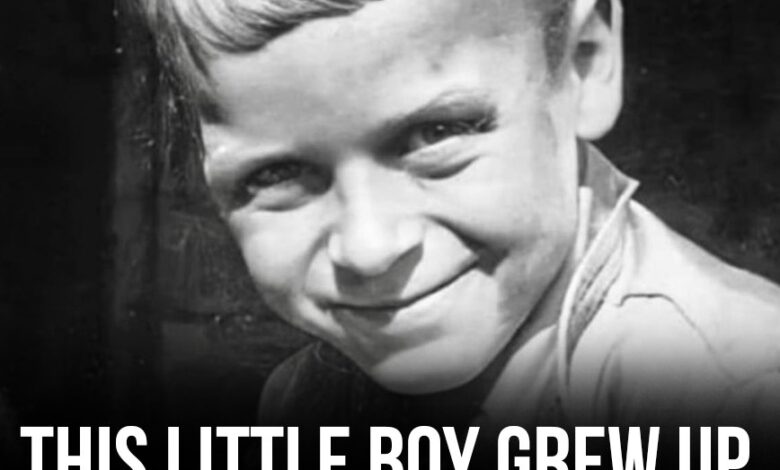
Yet the boy in that photograph would later become one of the most infamous criminals in American history. His name was John Wayne Gacy, a man whose crimes shocked the nation and whose legacy continues to be studied by historians, criminologists, and psychologists decades after his death.
Born on March 17, 1942, in Chicago, Illinois, Gacy spent his early years in what appeared to be a typical American household. However, behind closed doors, life was often difficult. His father struggled with alcoholism and was known for harsh and abusive behavior. Family members later described a home environment filled with tension, criticism, and emotional hardship. While his mother attempted to provide support and protection, the challenges within the household left lasting effects on the young boy.
During childhood, Gacy also experienced several health issues, including head injuries that required medical attention. Although experts have debated whether these incidents played any role in shaping his later behavior, no single explanation has ever fully accounted for the choices he made as an adult. Like many complex criminal cases, researchers continue to examine a combination of environmental, psychological, and personal factors when discussing his life.
To neighbors and classmates, however, Gacy often appeared no different from other children. Photographs from his early years show a cheerful youngster who seemed to fit comfortably into everyday American life. Looking back, many people find these images unsettling because they reveal no obvious signs of the person he would eventually become.
As an adult, Gacy built a life that appeared successful and respectable. He established himself as a building contractor and became involved in community activities. He was active in local organizations and earned a reputation as a hardworking businessman. To many people who knew him, he seemed friendly, outgoing, and engaged in civic life.
One of the most surprising aspects of his public image was his role as “Pogo the Clown,” a character he portrayed at children’s events, charitable gatherings, and community celebrations. Wearing colorful costumes and entertaining families, he created an appearance that seemed completely inconsistent with the dark reality that would later emerge.
His public standing grew to the point that he was photographed with prominent public figures, including First Lady Rosalynn Carter in 1978. At the time, few could have imagined that authorities were already beginning to uncover evidence of serious crimes connected to him.
Behind the image of a respected businessman and community volunteer, investigators would eventually discover a deeply troubling pattern of criminal activity. Between 1972 and 1978, Gacy was responsible for the deaths of at least 33 young men and boys. Many of the victims were teenagers or young adults whose disappearances initially attracted limited public attention.
For years, law enforcement struggled to connect the cases. Families searched desperately for answers while investigators worked to understand what had happened to the missing individuals. The truth remained hidden until a major investigation in late 1978 brought authorities directly to Gacy’s home in Norwood Park, Illinois.
The discoveries made during that investigation shocked the nation and quickly became one of the most significant criminal cases in American history. News coverage spread across the country, and the public struggled to comprehend how someone who appeared so ordinary could be linked to such devastating crimes.
Following his arrest in December 1978, Gacy faced extensive legal proceedings. Evidence collected during the investigation ultimately led to multiple convictions. In 1980, he was found guilty and sentenced to death.
The case attracted enormous public attention throughout the following years. Criminal psychologists, journalists, and legal experts examined nearly every aspect of his life, searching for explanations that might help society better understand how such crimes could occur. Despite extensive study, many questions remained unanswered.
While incarcerated, Gacy continued to attract attention for unusual reasons. He spent time creating artwork, including self-portraits depicting clown imagery associated with his public persona. Over time, these paintings became widely known and controversial, generating debate about crime, notoriety, and the commercialization of criminal history.
On May 10, 1994, Gacy was executed by lethal injection, bringing an end to one of the most infamous criminal cases in modern American history. Yet even after his death, public interest in the case did not disappear. Books, documentaries, academic studies, and news reports have continued to examine his life and crimes in an effort to better understand the factors that contributed to such tragic events.
One reason the old childhood photograph continues to capture public attention is the dramatic contrast it represents. People see a smiling young boy and naturally associate the image with innocence, hope, and possibility. Knowing what happened later creates a powerful emotional reaction because it challenges assumptions about human nature and personal development.
The photograph raises questions that continue to spark discussion among psychologists, educators, parents, and researchers. To what extent does childhood shape the adults we become? How much influence do family experiences, environment, and personal choices have over the course of a lifetime? Can warning signs always be identified, or do some individuals conceal their true nature from those around them?
While experts continue to debate these questions, one lesson remains clear. Human behavior is often far more complex than appearances suggest. A single photograph can capture only a brief moment in time, not the countless experiences, decisions, and circumstances that follow.
Today, the image of young John Wayne Gacy serves as a sobering reminder that outward appearances do not always reveal the full story of a person’s life. The contrast between the smiling child in the photograph and the crimes that later shocked the nation continues to fascinate and disturb people around the world. Decades later, the case remains one of the most studied examples of how a seemingly ordinary life can conceal a deeply troubling reality, leaving future generations to reflect on the complicated relationship between childhood, character, and the choices people make throughout their lives.